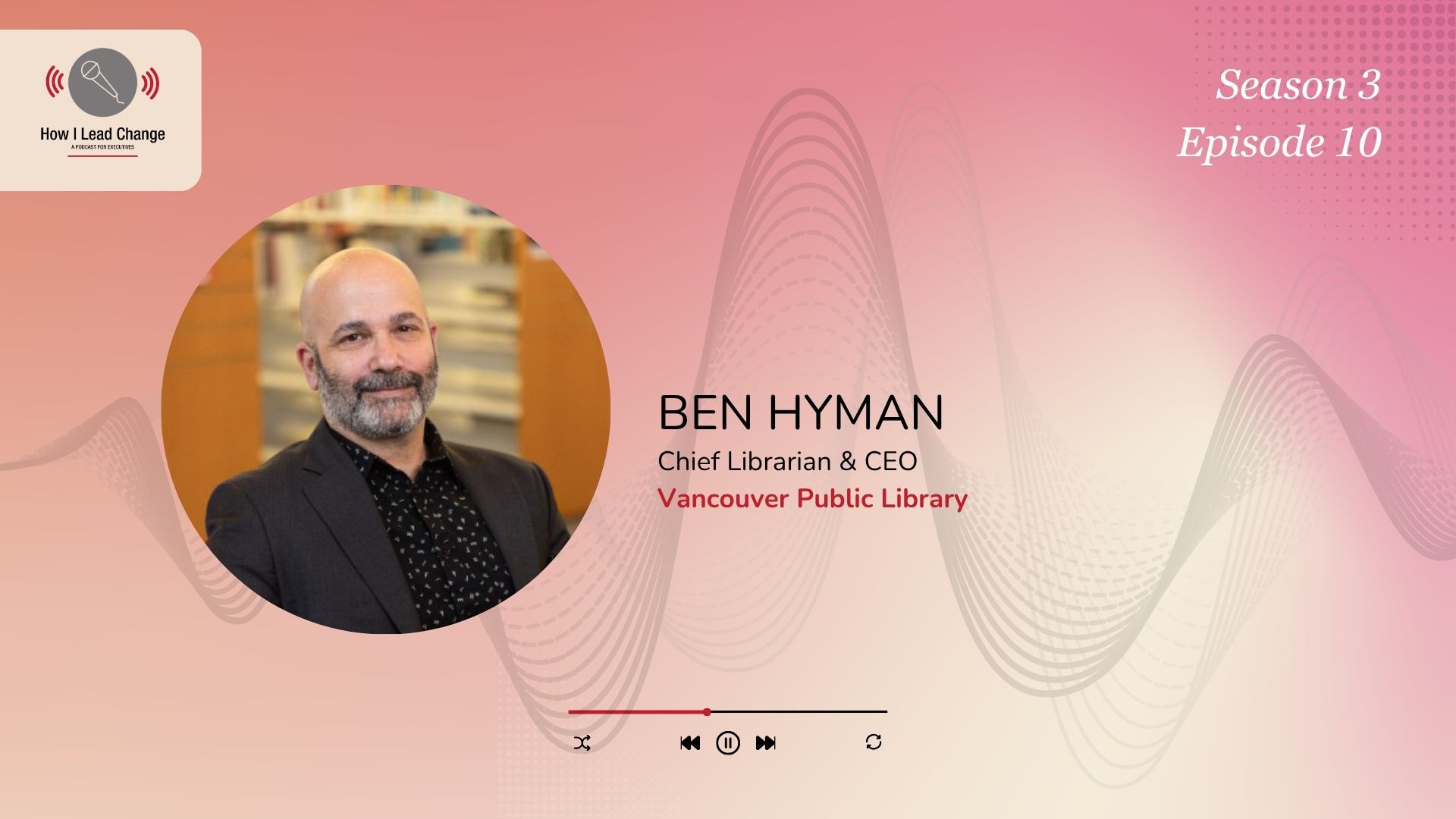
#HILC | Leading Change Through Transparency and Trust with Ben Hyman, Chief Librarian & CEO, Vancouver Public Library

Change leadership is not simply about setting a direction. It is about bringing people along, creating space for honest feedback, and showing that their input has been heard.
In an episode of How I Lead Change, Ben Hyman, Chief Librarian and CEO of the Vancouver Public Library, shares lessons from his experience leading change across public, post-secondary, and cooperative library environments. His approach highlights the importance of transparency, engagement, accountability, patience, and trust when navigating organizational change.
Transparency Creates Context for Change
For Hyman, transparency is an important part of helping people understand organizational decisions.
As the Vancouver Public Library develops a new strategic plan, he describes the importance of being open about the pressures and risks facing the organization. This is paired with engagement involving key interests, major partners, city leadership, and the public.
This approach offers an important lesson for leaders: communicating a decision is not the same as helping people understand it.
When people have greater visibility into the forces shaping decisions, they can better understand not only what is changing, but why.
Listening Means Hearing the Hard Things
Engagement requires more than simply asking people for their opinions.
Leaders also need to be willing to hear concerns, challenges, and perspectives that may be difficult or unexpected. Ben Hyman emphasizes being open to both the hard things and the ideas and opportunities people bring forward.
At the Vancouver Public Library, workforce participation in the development of the new strategic plan received what he described as an “exceptionally high response.” The next step, he explained, is working through that input to understand the opportunities, issues, and concerns that were raised.
For leaders managing change, the lesson is simple: asking for feedback creates a responsibility to genuinely consider it.
Turning Feedback Into Action Builds Trust
Listening is only one part of the equation. Leaders must also determine how to respond.
Not every idea can be implemented. Budgets, resources, priorities, and organizational realities all influence what can be done. But Ben Hyman connects trust with thoughtfully considering how an organization responds to the feedback it has requested.
When people participate in a change process, they want to know their contribution mattered. Leaders can strengthen trust by showing how feedback influenced decisions, what can be acted upon, and where constraints prevent action.
Create Space to Fail Forward
Change rarely happens perfectly.
Hyman discusses the importance of being able to recover from failure rather than repeatedly making the same mistakes. He frames this through a particularly memorable question:
“And so how do we break that model and fail forward rather than stagnate?”
That distinction matters for organizations navigating transformation.
Failure does not necessarily mean change has failed. What matters is whether the organization can learn, adapt, and move forward rather than becoming stuck.
Accountability Keeps Change Grounded
Alongside experimentation and learning, Hyman emphasizes accountability. Drawing on his experience developing a cooperative model, he reflects on the difficulties of challenging established hierarchies, structures, power, and information politics.
For him, accountability also means creating an environment where people can share in success and grow from failure.
That balance is important in change leadership. Organizations need enough flexibility to learn and evolve, while maintaining clear frameworks for how decisions are made.
Patience Is Part of Leading People Through Change
One of Hyman’s key pieces of advice for other leaders is patience.
A leader may understand the urgency behind a change and feel ready to move immediately. But that does not mean everyone has reached the same point.
Ben Hyman reflects on having to practise patience in his own leadership and describes impatience or cynicism toward others as potential signals for leaders to examine their own effectiveness in leading change.
Change leadership, then, is not simply about moving faster. It is about remaining connected to the people who ultimately have to move with the change.
The Takeaway: Engagement Only Matters If It Leads Somewhere
The strongest theme from Ben Hyman’s perspective is that trust is built through what leaders do after they ask people to participate.
Transparency provides context. Engagement brings different voices into the process. Accountability keeps decisions grounded. Patience gives people room to navigate change. And responding thoughtfully to feedback demonstrates that participation has meaning.
For change leaders, that creates an important question:
If you are asking people for feedback, are you prepared to listen, respond, and show them what happens next?